
Material issues, labor, and finished goods on the same financial backbone—shop floor and finance finally agree.
Manufacturing depth that pays off
BOM→WO
Structure to execution
Floor↔GL
Output reaches the ledger
Plan
MRP / MTS demand signals
IVA inside PerfectoERP
Ask IVA about manufacturing on your live screens—what a capability means, why a document is blocked, or which report explains a variance. Guidance stays inside your job functions and permissions.
Top capabilities in depth
BOM & work orders on one ledger
Structure, execute, and post manufacturing without a parallel cost book.
Reliable BOMs
Every production issue knows which components to consume.
Work order lifecycle
From release through material issue to finished receipt with traceability.
Cost into GL path
Manufacturing movements support the same financial close operations trust.
Shop floor ↔ office
One company so planners, storekeepers, and controllers stop reconciling three systems.
Where manufacturing value shows up
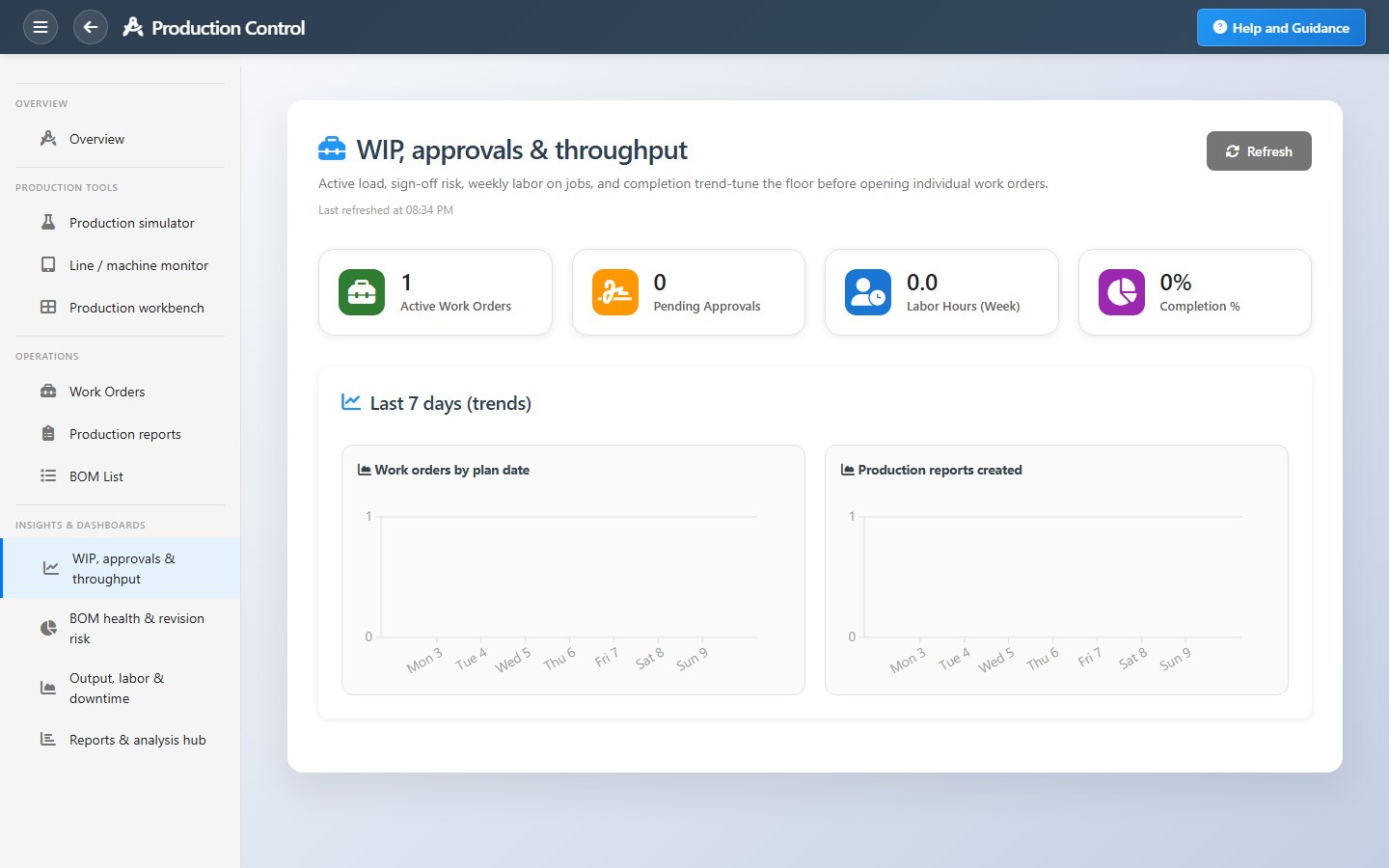
Manufacturing ERP pays off when shop-floor activity is not a parallel world from finance. If components leave the store in one system and finished goods appear in another, cost of goods sold becomes a monthly reconstruction project. A work order should issue components, collect labor or overhead where you track it, receive finished goods, and leave a clear audit trail in the same ledger inventory already posts to.
Start with a clean item master and units of measure. Then define one production BOM for your highest-volume product—the SKU you make most often and understand best. Create a work order, issue materials, report completion, and receive to stock. That single loop teaches the organization more than a hundred slides about “future MES scope.”
A work order that never reaches the ledger is just another parallel universe.
Capabilities from plan to ledger
Plant-to-ledger capabilities
Master
Item / BOM
Plan
MRP / MTS
Order
Work order
Execute
Issue / make
Receive
Finished goods
Cost
Valuation
PerfectoERP connects manufacturing to inventory and financial control so valuation and COGS stay current as work orders complete. Plant supervisors see order status; finance sees the same movements in the books. Quality holds and rework fit once both sides trust the core path.
Alternate BOMs, scrap handling, and multi-level assemblies come after the first product posts cleanly. Adding complexity before the happy path works only hides whether the issue–make–receive cycle is solid. Depth should follow evidence from your own production postings.
Planners and supervisors often avoid ERP screens because the language feels foreign. IVA sits beside live screens: field meanings, next steps, and answers in plain language—so go-live is driven by real work orders, not a long classroom program before anyone is allowed to touch production.
From BOM to finished goods without COGS archaeology
Challenge
Components issued in one system; finished goods appeared in another; monthly COGS was a reconstruction project.
Approach
BOM, work order issue/make/receive, and valuation posted through PerfectoERP into the same inventory and financial path.
Outcome
Plant supervisors and controllers finally argued from one work-order history.
Plant and finance on one truth
Manufacturing features that close the gap
Work orders on the ledger path
Issue, make, and receive leave a trail finance can value—not a parallel shop universe.
Make-to-stock readiness
Finished goods replenishment connects planning, stock, and sales demand.
Quality and depth when ready
Holds, alternates, and richer planning expand on the same posting core.
Whether you run discrete manufacturing in the Americas, Europe, MENA, or elsewhere, the control loop is the same: plan → order → issue → make → receive → cost. PerfectoERP is built for that loop so you can post your first order without funding a separate manufacturing program first.
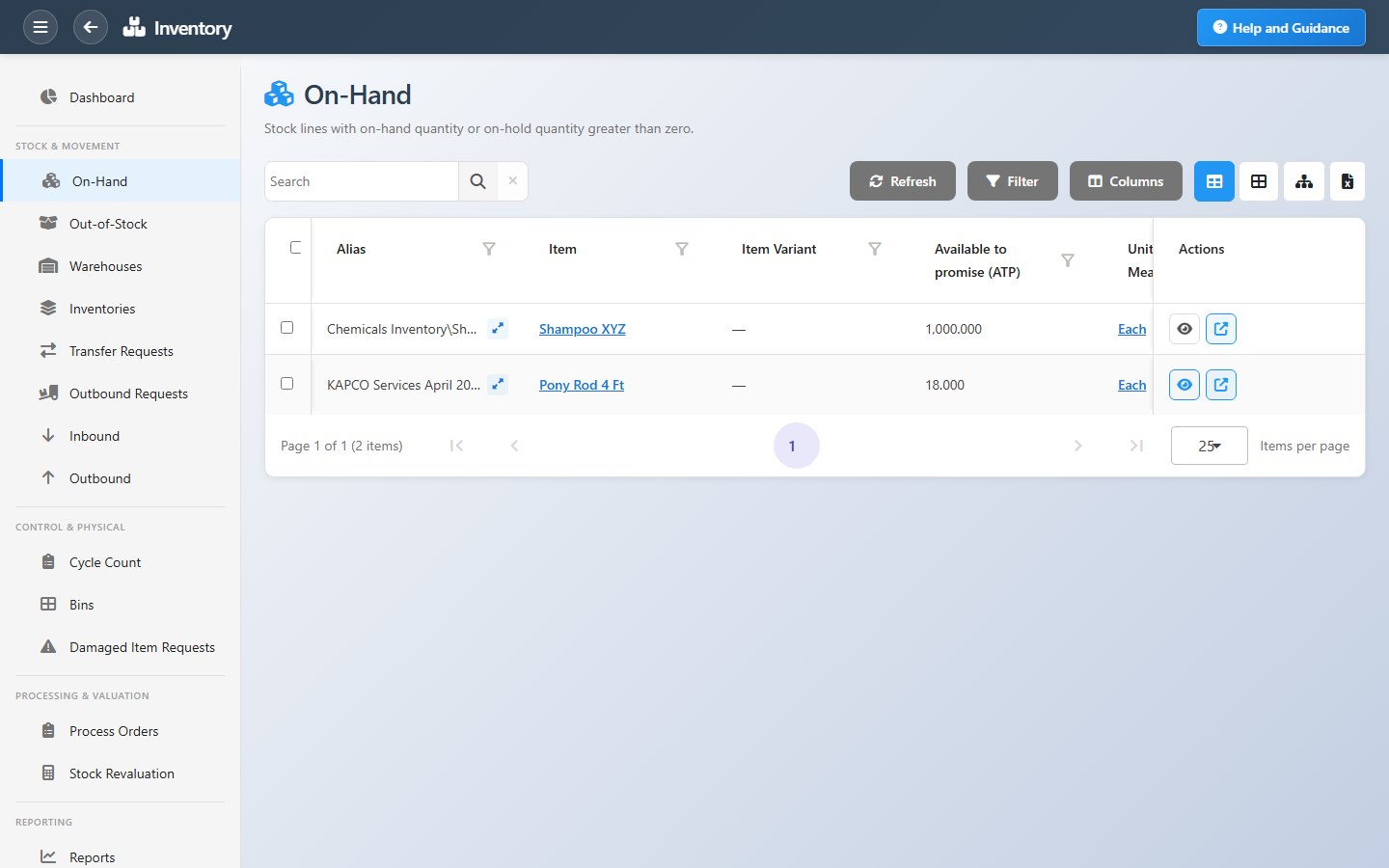
Tie purchasing and inventory into the same story. Shortages on a work order should be visible against on-hand and inbound supply. Finished goods should land in the warehouse finance already values—so sales and fulfillment work from the same stock truth.
Manufacturing ERP becomes an operating system when planners and floor supervisors share the same order history the ledger already values. That agreement—across product families and lines—is what leaders explore when they evaluate PerfectoERP in depth.
Without PerfectoERP vs with PerfectoERP
Spreadsheets & silos
- BOM versions in email
- Shop floor disconnected from the ledger
- Quality on paper checklists
- COGS reconstructed monthly
PerfectoERP manufacturing
- BOM → work order → stock → ledger
- MTS and MTO on one plant truth
- IVA on live shop screens
- Plant and finance share one truth
What to remember
- Evaluate manufacturing by business outcomes—not by how many workshops a vendor schedules.
- Look for capabilities that connect documents, postings, and permissions on one company.
- Use IVA on live screens within your security model—credits are included per user on your plan.
- Explore related modules and Pricing when you want to go deeper or launch.
Keep exploring
“BOMs and work orders that post to one ledger” is meant to deepen how you evaluate PerfectoERP—benefits, features, and how the pieces fit. When you are ready to experience it on your own company, open Get Started or Pricing.
Related on PerfectoERP