
Why stock movements should post to GL automatically—and how to self-implement that path.
Inventory–finance alignment
1 post
Qty and value together
0 sheets
No middleware spreadsheet
Live TB
Store reflects in the books
IVA inside PerfectoERP
Ask IVA about operations on your live screens—what a capability means, why a document is blocked, or which report explains a variance. Guidance stays inside your job functions and permissions.
Top capabilities in depth
Inventory ↔ finance capability map
Quantity movements that carry valuation into the same trial balance.
Stock that posts
Receipts, issues, and adjustments update quantity and the financial story controllers read.
Shared chart of accounts
Inventory valuation lands in accounts already used for close—not a parallel stock book.
Margin without archaeology
COGS and margin talks use the same movements the warehouse already posted.
Multi-site still one ledger
Transfers between warehouses keep traceability without breaking financial control.
Why the ops–finance handoff breaks value
When the warehouse receives goods in one tool and finance journals them later by hand, you lose time and risk valuation mistakes. Quantities drift, costs lag, and month-end becomes a negotiation between two “sources of truth.” PerfectoERP connects inventory movements to accounts in one posting—so stock and the ledger stay aligned.
The business case is straightforward. Every inbound receipt, outbound issue, transfer, and adjustment should update both quantity and financial impact without a spreadsheet in the middle. Controllers see inventory value that matches operations; warehouse leads see movements finance already trusts.
When warehouse and finance share one posting, month-end stops being a negotiation.
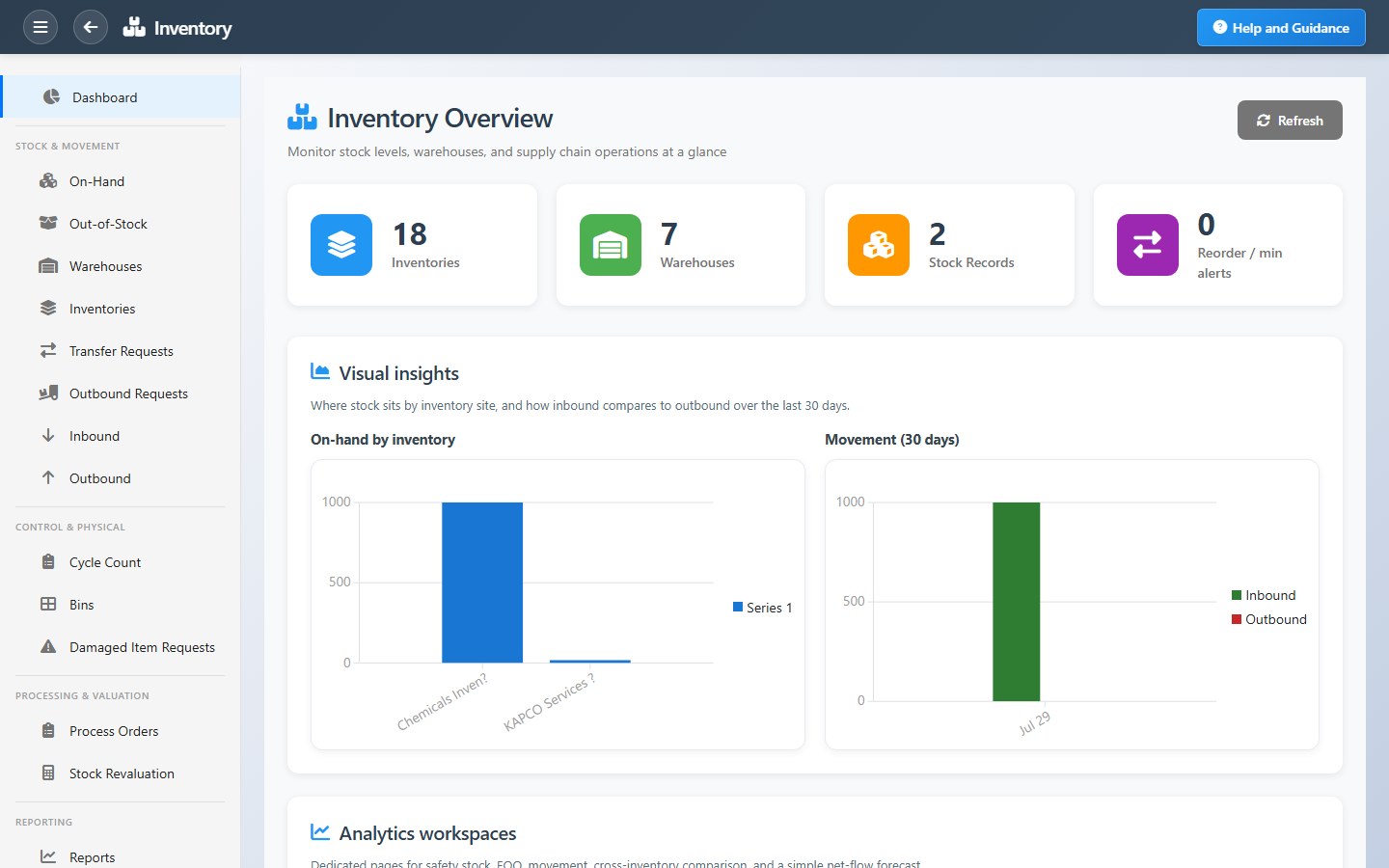
Capabilities that keep one truth
Stock-to-books capabilities
Receive
Inbound
Move
Transfer
Issue
Demand
Value
Accounts
Report
TB / COGS
Set receiving, issuing, and valuation rules clearly in practice. Decide how items are valued, which accounts receive the postings, and who can approve exceptions. Then grow into multi-warehouse detail, bins, and planning flags with confidence—because the core path already posts cleanly.
IVA explains valuation and account mapping screens in plain language for warehouse and finance users alike. New receivers ask how to process an inbound row; accountants ask why a movement hit a particular account—without escalating every question to a consultant.
Purchasing belongs in the same story. Purchase orders and goods receipts should feed inventory and, where configured, cost. When purchasing, inventory, and financial control share one platform, three-way match and landed cost conversations happen on documents—not in email threads.
Receipts that already mean something to finance
Challenge
Every inbound receipt needed a later journal; COGS debates were monthly archaeology between warehouse and accounting.
Approach
Inventory movements posted quantity and value in PerfectoERP with purchasing on the same path—so stock and the trial balance stayed aligned.
Outcome
Month-end variance talks shrank; leaders trusted the same movements operations already made.
What aligned stock and books unlock
Features that end the handoff
Valuation with movement
Receipts and issues update financial impact as they happen.
Purchasing on the same path
POs and goods receipts feed stock and cost conversations on documents.
Sales & retail feed the TB
Shipments and POS land in the ledger operations already run.
Retail and distribution teams connect point of sale or sales shipments early so the trial balance reflects operations in real time—not only at month end. Shrinkage and returns stay visible instead of appearing as unexplained journal entries later.
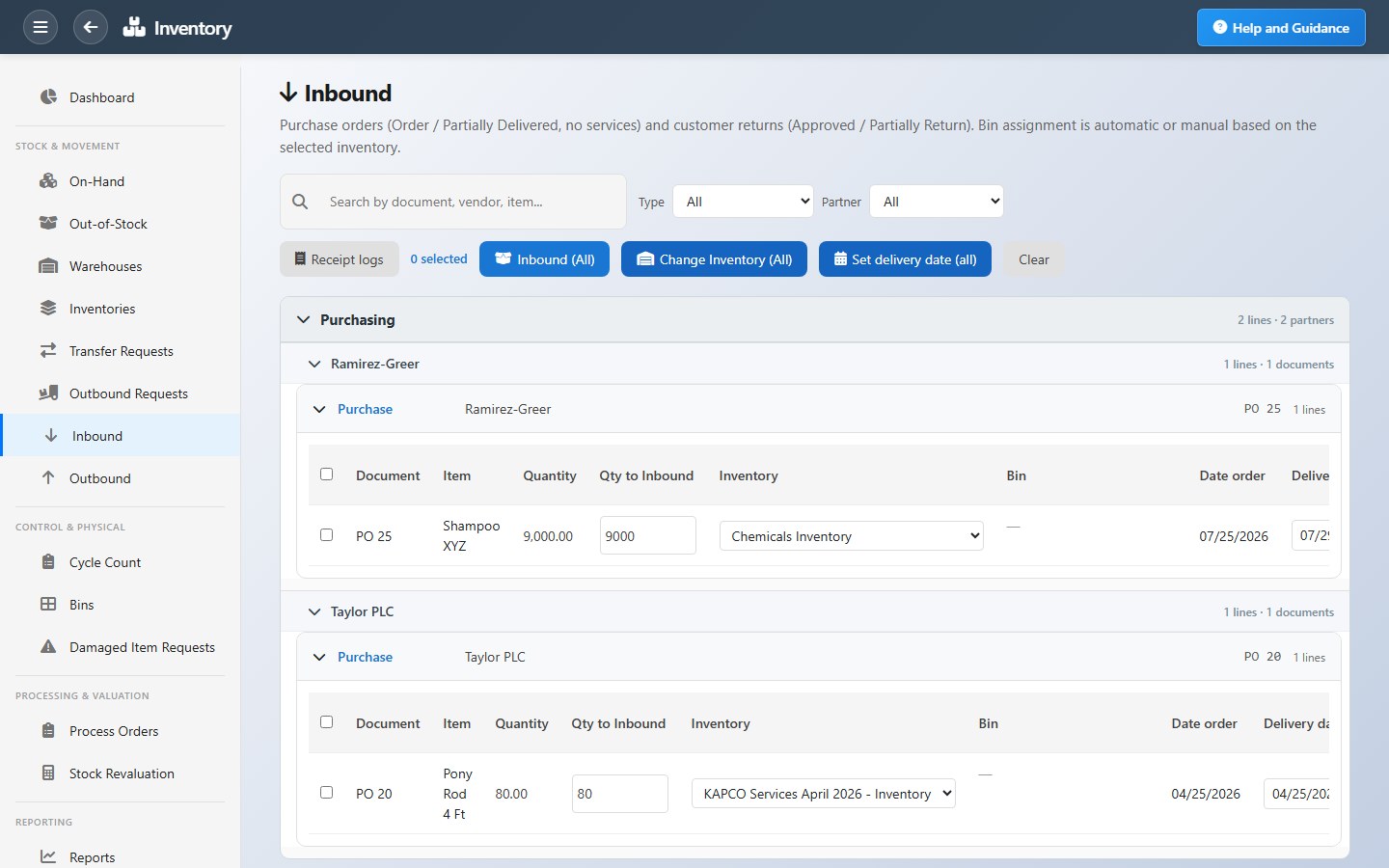
A composite scenario: one warehouse, a focused item set, receive a purchase, issue to a cost destination or sales flow, and confirm finance sees the same numbers. That connected path is what leaders evaluate when they explore PerfectoERP in depth.
PerfectoERP is built so inventory is not a satellite system. There is no middleware spreadsheet between the store and the books—only one company, one ledger, and IVA to help your team run it from the first hour.
Without PerfectoERP vs with PerfectoERP
Ops–finance handoffs
- Warehouse posts in one tool
- Finance journals later by hand
- Approvals via chat threads
- Vendor master duplicated
PerfectoERP operations
- Purchasing, inventory, and AP connected
- One posting path from stock to ledger
- IVA explains match exceptions
- Shared masters across the company
What to remember
- Evaluate operations by business outcomes—not by how many workshops a vendor schedules.
- Look for capabilities that connect documents, postings, and permissions on one company.
- Use IVA on live screens within your security model—credits are included per user on your plan.
- Explore related modules and Pricing when you want to go deeper or launch.
Keep exploring
“Stop the spreadsheet handoff between inventory and finance” is meant to deepen how you evaluate PerfectoERP—benefits, features, and how the pieces fit. When you are ready to experience it on your own company, open Get Started or Pricing.
Related on PerfectoERP